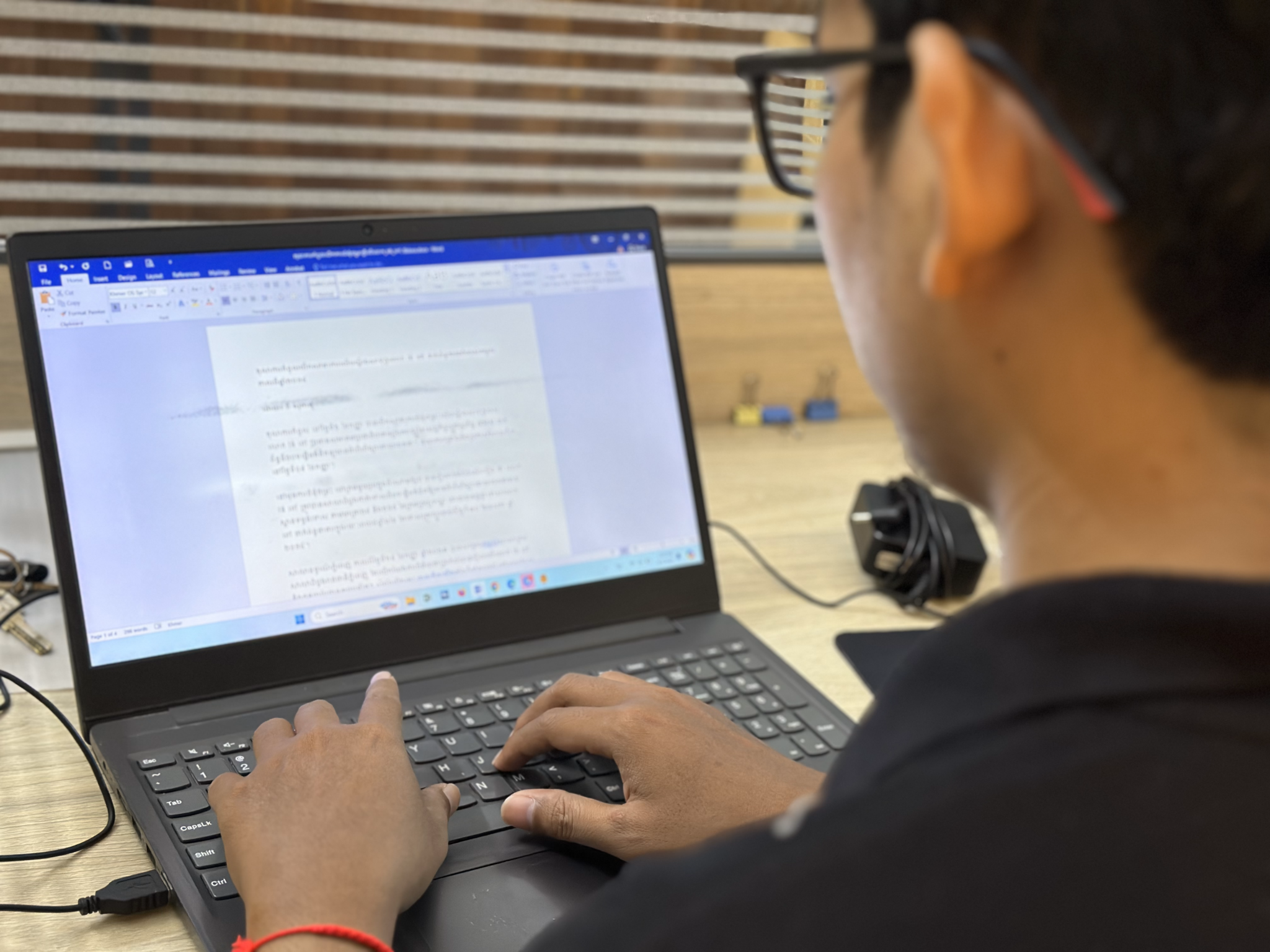
Journalists at the few remaining independent media outlets in Cambodia are faced with an uphill task of securing interviews or comments from analysts or social commentators on critical or sensitive issues as the latter are afraid to talk about sensitive social issues.
As a result, the flow of trusted information to the public has been impacted, journalists lamented, noting that the intimidation on commenters was also a form of restriction on press freedom.
Seoung Nimol, a reporter with CamboJA News, said at present, it was difficult to find sources who “dare to comment” on social and sensitive issues.
“Those who dared to talk about politics and human rights in the past […] are now difficult to approach for comment. No one speaks anymore. In addition, many people who I used to talk to have left for overseas,” she said.
Sharing a similar experience, Lors LibLib, freelance reporter with Voice of America, said he has faced challenges interviewing sources about sensitive issues as they decline to comment or say that the issues are not relevant.
“What they [commenters] are worried about is to say [something] that might harm them,” said LibLib, who has worked as a journalist for three years now.
Freelance journalist Va Sopheanut noted that since last year, the trend of independent analysts or social commentators providing comments on critical social issues is decreasing.
Sources are now practicing self-censorship when they speak to journalists, in particular issues involving politics.
“They are most likely to comment in general [rather than specific] on the topics relating to political leaders,” he said.
CamboJA’s research and advocacy team, which monitors the media situation, interviewed several human rights advocates, and social and political analysts, who said freedom of expression was highly restricted.
Am Sam Ath, operations director of local rights group Licadho and a human rights advocate for over 20 years, noted the decline in freedom of expression when Cambodia’s main opposition party was court-dissolved in 2017.
Freedom of expression is necessary and fundamental in a democratic society but free speech regarding critical issues was restricted, he remarked.
“Although interviews [with the media] are ongoing, some points need to be carefully made. We limit our freedom to talk or provide analysis [on issues],” he said. “As seen previously, several [opposition] politicians and civil society officials had been sued and [some faced] demands for high compensation.”

Ny Sokha, president of rights group Adhoc, said currently people who have dissenting thoughts are afraid to express their opinion on social media and to news portals.
“We see more and more accusations against those who dare to express their opinion. That is why some of us are worried when we give our views,” he said.
A few social and political analysts said they experienced threats following their comment on critical issues. They shared that certain issues cannot be “freely uttered by those who live in the country”. The analysts figured that sticking to “simple or general comments” was safe.
“I can say things about the Funan [Techo] Canal but I won’t comment on the CLV-DTA [Cambodia-Laos-Vietnam Development Triangle Area]. I don’t dare say [anything] as we see a lot of things happening, for example arrests, which is worrying everyone,” one analyst said.
In February, a senior official of human rights group Adhoc, Soeng Senkaruna, was sued by the ruling party CPP for allegedly making a comment with foreign media, The Cambodia Daily Khmer, which was said to “provoke unrest and incite hatred against the party”.
CPP urged the court to consider their request to indict and sentence Senkaruna in accordance with the law and demanded a compensation of two billion riel (approximately $500,000). Senkaruna fled abroad for his safety.
Incitement and defamation charges were “commonly” issued against activists, politicians, human rights defenders and even journalists.
Media portals are not spared either. In 2023, the government ordered internet service providers to block the access to foreign-based news portals and social media accounts of The Cambodia Daily Khmer, Radio Free Asia (RFA), and Kamnotra.
The order was issued after Voice of Democracy or VOD, an online media, was shuttered by the government on February 12, 2023.
The number of independent media outlets in the country has dwindled since 2017 with the closure of The Cambodia Daily due to the government’s alleged pressure. Following that, The Phnom Penh Post was allegedly sold to buyers “friendly to the government” and RFA was “made” to close its office in Phnom Penh.
Chhan Sokunthea, executive director of Cambodian Center for Independent Media (CCIM), said it was difficult for journalists to interview local independent sources on critical issues. She said the sources normally faced legal action when commenting on critical issues related to the government or powerful individuals.
“It’s a challenge for journalists who are not able to report sensitive stories, which makes it impossible for the public to access information from all angles,” she said, adding that this led to a lack of information on social issues.
According to OHCHR, a key principle of fundamental freedom – right to freedom of expression – is an essential factor in fostering a democratic society. “Everyone shall have the right to freely express their concerns and opinion without interference from the government.”
In 2023, press freedom and freedom of expression continued to be undermined in Cambodia, the Cambodian Center for Human Rights reported in its annual publication on the state of freedom of information, expression and the press.