As of June 2026, journalist Luot Sophal has spent four months in pretrial detention at Oddar Meanchey Provincial Prison, facing charges of “incitement to commit a felony” and “demoralization of the armed forces.” If convicted, Sophal could face a prison sentence of six months to five years.
Sophal, 38, a reporter for Srotop Yuvakvey in Oddar Meanchey province, was arrested by provincial military police on 13 February 2026 after reporting on water shortages affecting soldiers stationed along the Cambodia-Thailand border.
The report was later removed, and the journalist subsequently posted an apology video on his personal Facebook account in which he acknowledged the alleged wrongdoing.
The following day, the Oddar Meanchey Provincial Court charged Sophal with two offences under the Criminal Code: incitement to commit a felony under Article 495, which carries a prison sentence of six months to two years, and demoralization of the armed forces under Article 472, which carries a prison sentence of two to five years.
What did he do wrong? He only reported that soldiers lacked water. I never imagined that what he said would be considered such a serious offense. I am not asking for anything else—I only ask that he be released,
Increased restrictions on journalists due to national security concerns
Authorities frequently used criminal provisions to target journalists, such as incitement, treason, or vague national security allegations, rather than pursuing civil remedies under the Cambodian Press Law. Pre-trial detention and prolonged legal uncertainty were used as tools of intimidation.
Since the armed conflict between Cambodia and Thailand erupted in July last year, at least 22 of journalists have been arrested or faced restrictions in connection with their reporting on the conflict. On 26 March 2026, the Court of Appeal in Battambang Province upheld the Siem Reap Provincial Court’s verdict against two journalists Phon Sopheap and Pheap Pheara who were also charged under the Criminal Code. The court sentenced both journalists to 14 years in prison on a charge of supplying a foreign state with information prejudicial to national defence under Article 445.
The charge stemmed from a photograph the journalists posted of themselves with soldiers at Ta Krabei Temple. Unexploded landmines were visible in the background of the image, which was later widely circulated by Thai media outlets.
The use of broadly defined national security charges in this context raises concerns about the impact on freedom of expression and contributes to a chilling effect on media freedom. It also raises questions about the proportionality of the sentence and its consistency with international human rights standards, including the right to freedom of expression.
Family Hardship
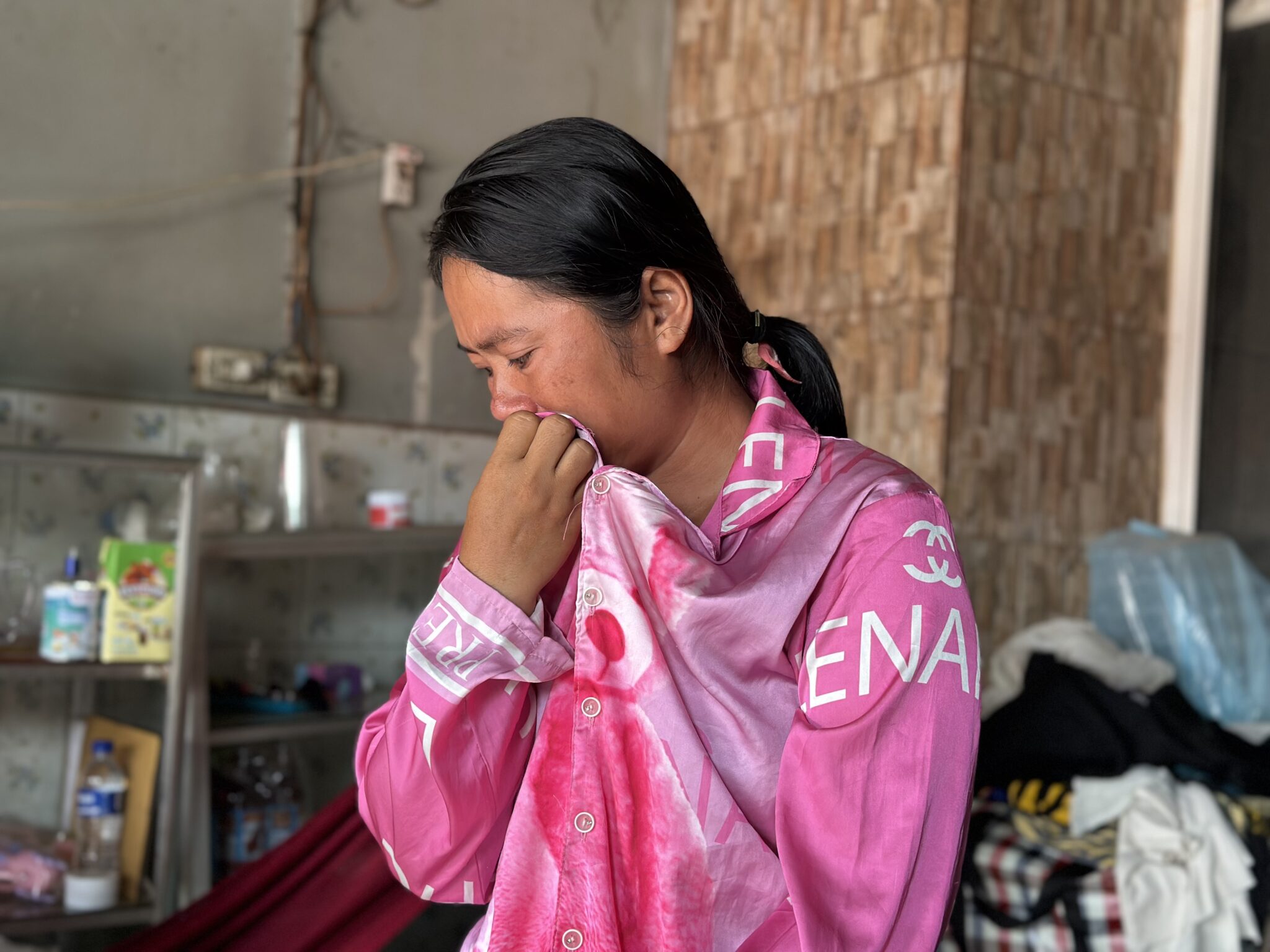
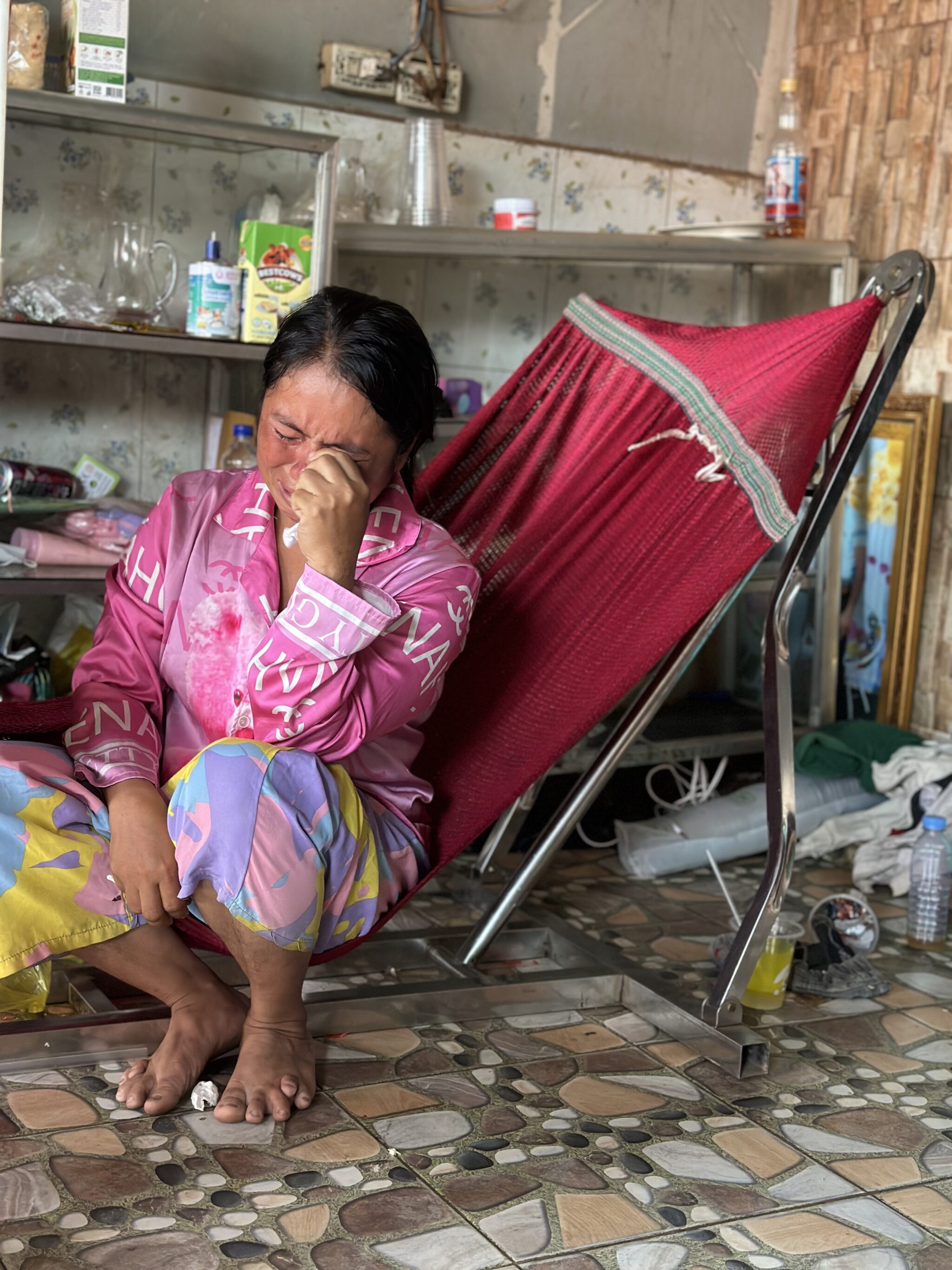
His wife, Voeun Lalang, 38, who is caring for four children, has appealed for her husband’s release, stating that the family faces severe financial hardship and is struggling to repay bank loans.
Lalang frequently broke into tears and struggled to continue speaking as she described her family’s situation while her husband remains in detention.
She noted that Sophal became involved in journalism about two years ago and became more active during the Cambodia-Thailand armed conflict. Lalang added that she initially did not know he was working as a journalist and believed farming was his primary occupation.
“He is not even paid for this work. I always wondered why he kept doing it. If he is released, I will not let him work as a journalist anymore. I just want our family to survive,” Lalang said. She explained that she now earns a small income selling sugarcane juice, making it difficult to support the family.
Lalang visits her husband in prison every 10 to 14 days, bringing food and supplies. She said each visit costs around 40,000 riels (about USD 10), including transportation from her home to the prison, food, and payments to prison guards.
During the visit, Sophal told his wife he is well but remains concerned about his family’s safety and stability outside of the prison, particularly because of the ongoing border conflict between Cambodia and Thailand. She added that the uncertainty surrounding the case and the responsibility of caring for the children have left her feeling fearful, anxious, and unable to sleep well.
Legal Support and Bail Request
Sophal is represented by the human rights organization, the Cambodian Human Rights and Development Association (ADHOC). According to his defense lawyer, a bail request was submitted to the Oddar Meanchey Provincial Court on 9 June; Sophal’s wife filed a separate request for his release that same day.
His wife, Lalang, said the family has received no support—including from her husband’s news outlet—apart from the legal assistance provided by ADHOC.
“I contacted his publisher and asked for support in finding a solution, but I have not received a response,” Lalang said. She also noted that she contacted the Oddar Meanchey provincial governor shortly after her husband’s arrest to seek intervention, and that Sophal called the governor from prison to request help in securing his release.
Pen Nuon, publisher of Sophal’s media outlet, told CamboJA on 11 June 2026 that he contacted the Oddar Meanchey provincial governor one day after Sophal’s arrest to seek intervention in the case. However, he said the governor declined to intervene, explaining that the matter was beyond his authority and involved higher-ranking officials.
Appeal for Release
Lalang expressed her belief that the arrest is unjust because Sophal’s reporting was intended to highlight the soldiers’ need for water and was not meant to cause harm.
She called for her husband’s release or a pardon on humanitarian grounds. Lalang added that her husband has little formal education and may not have fully understood the consequences of his words.
“Life is very difficult now. I respectfully ask both Samdech [Hun Sen and Hun Manet] to forgive my husband and allow him to return home,” she said.
“What did he do wrong? He only reported that soldiers lacked water. I never imagined that what he said would be considered such a serious offense. I am not asking for anything else—I only ask that he be released,” Lalang added.