
Regulatory hurdles remain major challenges for Cambodia’s media, local journalists said on Thursday at an event ahead of World Press Freedom Day.
The comments came as Reporters Without Borders released its annual index, keeping the country in the “very serious” category. For the first time, more than half the world’s countries now fall into the “difficult” or “very serious” brackets.
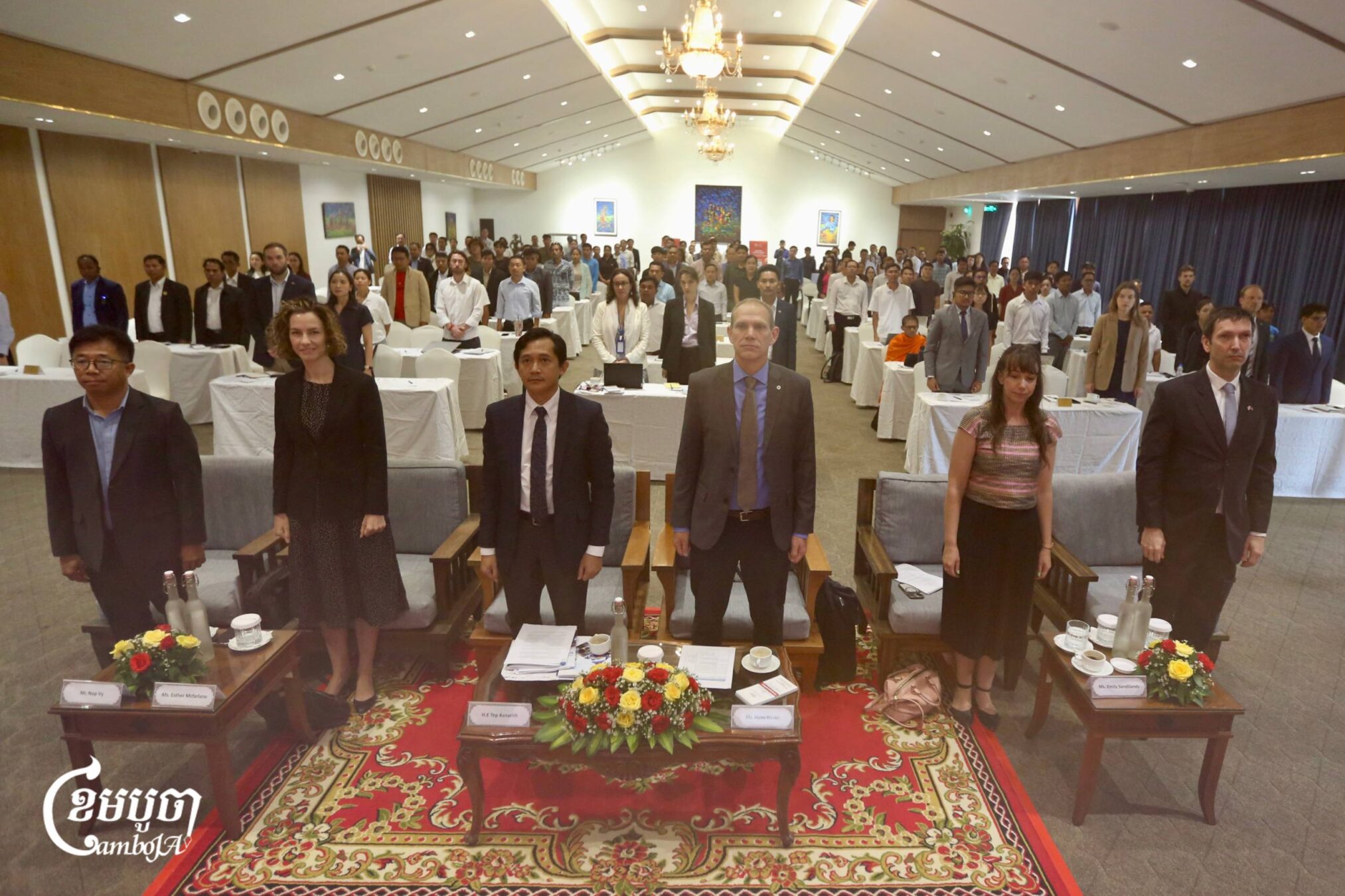
The event in Phnom Penh brought together nearly 200 representatives from media groups and civil society, including journalists, students, content creators, citizen reporters, youth groups, embassies and government bodies, to discuss press freedom and the operating environment for media.
It served as a platform for dialogue between journalists and state actors, allowing both sides to exchange views, raise concerns and explore ways to foster a more supportive climate for the press.
During the discussions, journalists raised concerns over new qualification rules, saying they add barriers to accessing information. The Ministry of Information said the measures are intended to serve the public interest and improve the quality of journalism.
“Citizen journalists like me do not have a license,” Chhen Leakena said during the discussion. “I attended training with civil society groups to learn how to report, but when I go into communities [to report], they often ask about it [my credentials]. This new regulation is another challenge for us.”
Late last year, the ministry introduced stricter rules for journalists, including requirements for “good conduct” reports, a clean complaint record and ministry-approved journalism certificates to obtain a press card or operate legally. Press freedom advocates say the move tightens the vise on what little independent media remains in the country.
Tep Asnarith, a spokesperson for the Ministry of Information, said the rules are designed to serve the public interest and apply equally.
He said journalists, like others, have responsibilities to society and the law, and that the requirements aim to strengthen professionalism and credibility in an era of rising misinformation.
He added that similar regulations exist in other ASEAN countries and that the ministry has not received formal complaints.
Contrary to other reports on press freedom in Cambodia, a ministry report said conditions remain “good,” with around 81% of 570 journalists surveyed sharing that view. It said about 70% had not faced threats or harassment and nearly 85% had never been sued over their reporting.
Freelance journalist Phon Sothyroth said the ministry had “good intentions” in trying to bring order to the sector, but warned the rules create obstacles, particularly requirements such as a bachelor’s degree or formal certification given the limited number of media schools.
Ith Sothoeuth, president of the Communication and Media Promotion Organization, said the rules risk excluding citizen and independent journalists. Some provisions may conflict with Cambodia’s constitution and international standards, he added, while requirements such as health certification could lead to discrimination.
While journalists said regulations are becoming more restrictive, RSF reached a similar conclusion. Cambodia ranked 151st out of 180 countries in this year’s index, up from 161st in 2025 but still near the bottom.
Arthur Rochereau, RSF’s Asia-Pacific advocacy officer, said new rules are complicating journalists’ work and legal threats are rising.
CamboJA documented 61 violations affecting 57 journalists in 2025, all linked to their reporting. Legal action accounted for 45 cases, or 74% of the total, a 61% increase from 28 cases in 2024.
CamboJA executive director Nop Vy said the government should consult stakeholders, including civil society and journalists, when drafting new laws.
“All policies or regulations should not further restrict or shrink the space for journalists,” he said. “We want to see journalists work with quality, professionalism and full freedom to promote freedom of expression.”
Credit by: Seoung Nimol, CamboJA News