Persistent Reporting Under Pressure: Journalists Confront Escalating Legal Intimidation
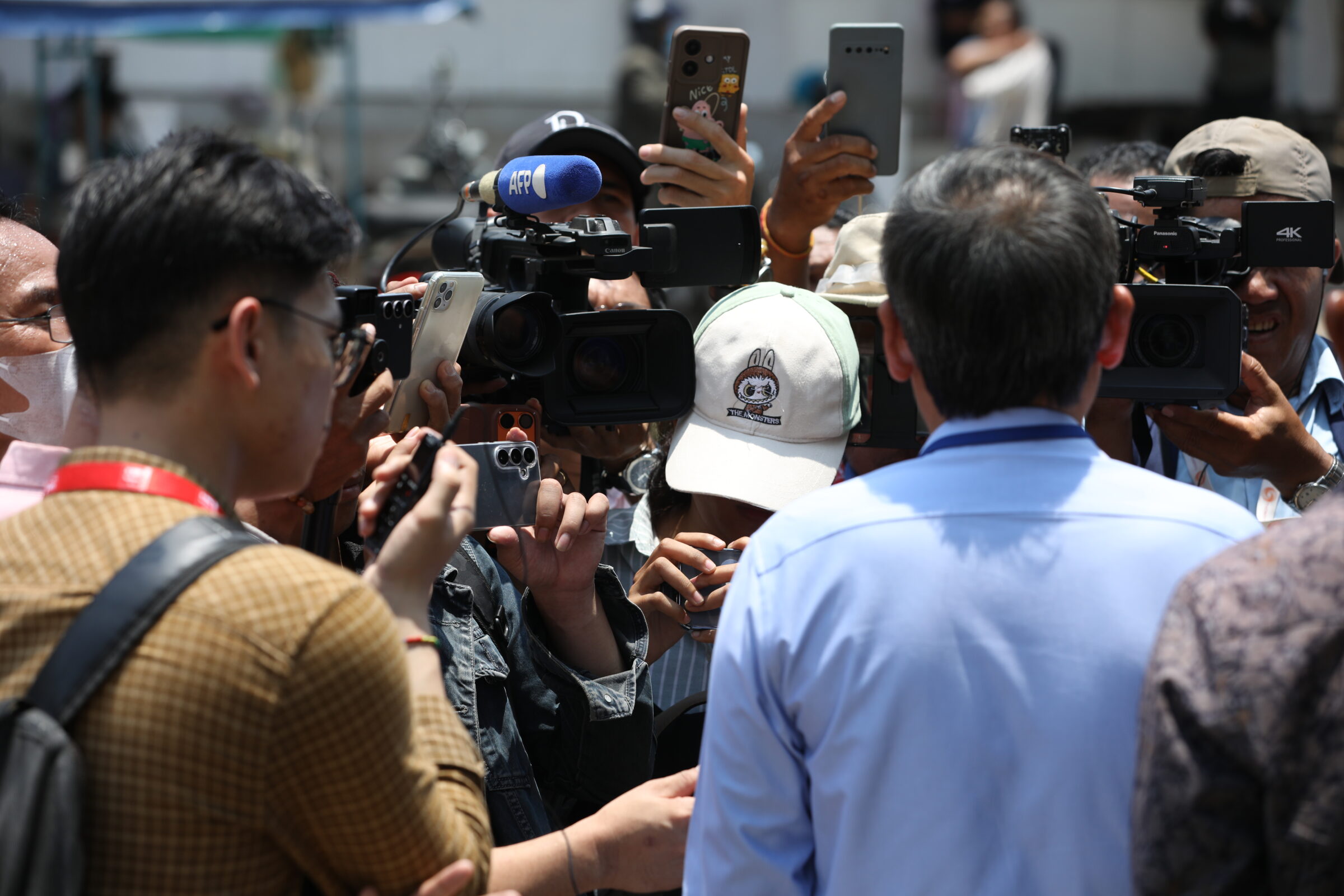
Cambodia’s media landscape deteriorated amid a widening disconnect between official government narratives and the lived reality of journalists and independent media. While the Ministry of Information’s second State of Press Freedom in Cambodia report claimed improvements in media freedom, this assessment stood in stark contrast to findings by civil society, independent media outlets, and international observers.
In 2025, CamboJA documented 61 cases of violations targeting journalists and media outlets in Cambodia. These cases involved journalists working primarily in online media, with social media—particularly Facebook—emerging as a high-risk reporting platform in Cambodia. Women journalists were disproportionately affected in several cases, including incidents involving gender-based violence and sexual harassment. Several journalists experienced multiple violations over time, indicating entrenched patterns of targeting rather than isolated incidents.
Journalists were subjected to physical assaults, psychological abuse, legal action/threats, sexual harassment, discrimination and intimidation. These acts caused physical injury, psychological trauma, engendering a climate of fear and self-censorship among journalists, particularly among women journalists who faced both online and offline sexual harassment.
“The increasing number of legal accusations against journalists serves as a form of intimidation and a signal of threat against reporters. However, even in the absence of government accountability, reporters persist in their work,” said Nop Vy, CamboJA’s Executive Director.
Authorities frequently used criminal provisions to target journalists, such as incitement, treason, or vague national security allegations, rather than pursuing civil remedies under the Cambodian Press Law. Pre-trial detention and prolonged legal uncertainty were used as tools of intimidation. These patterns are reflected in many cases of journalists being targeted, including in the case of an environmental journalist who has been facing multiple lawsuits and remains under the court supervision.
During 2025, six journalists were arrested, charged and imprisoned, representing the legal actions most commonly taken by state actors to target journalists. These cases include two instances when journalists were sentenced to 14 years in prison on charges of supplying a foreign state with information prejudicial to national defence linked to the Cambodia-Thailand border conflict.
In addition, four journalists were placed in pretrial detention on incitement charges for periods ranging from ten days to seven months. This can be compared to the situation in 2024, five journalists were charged and placed in pre-trial detention.
The violations breakdown by safety dimensions.
| Safety dimension | Number of violations | Number of incidents |
| Legal safety | 45 | 23 |
| Physical safety | 9 | 9 |
| Psychological safety | 2 | 2 |
| Other violations against the right to freedom of expression | 5 | 5 |
| Total | 61 | 39 |
Violations recorded targeted both local and foreign journalists and media organizations. State actors were responsible for the majority of cases, 51 cases out of 61. This represents a 16% increase compared to 2024, when 44 incidents were carried out by state actors.
There were seven cases of violations that journalists reported to media organisations, human rights groups and foreign embassies in Phnom Penh. In addition, six cases were filed with authorities. Out of the cases filed with authorities, two were fully resolved as the individuals responsible were sentenced and jailed.
Journalists covering environmental issues, border conflict, crime, land disputes, corruption, human rights, political and economic affairs were disproportionately targeted during 2025. Reporting on the Cambodia–Thailand border conflict alone accounted for 23 cases, followed by seven cases of environmental reporting, seven cases of crimes and four cases of corruption-related reporting.
Download the full report: English